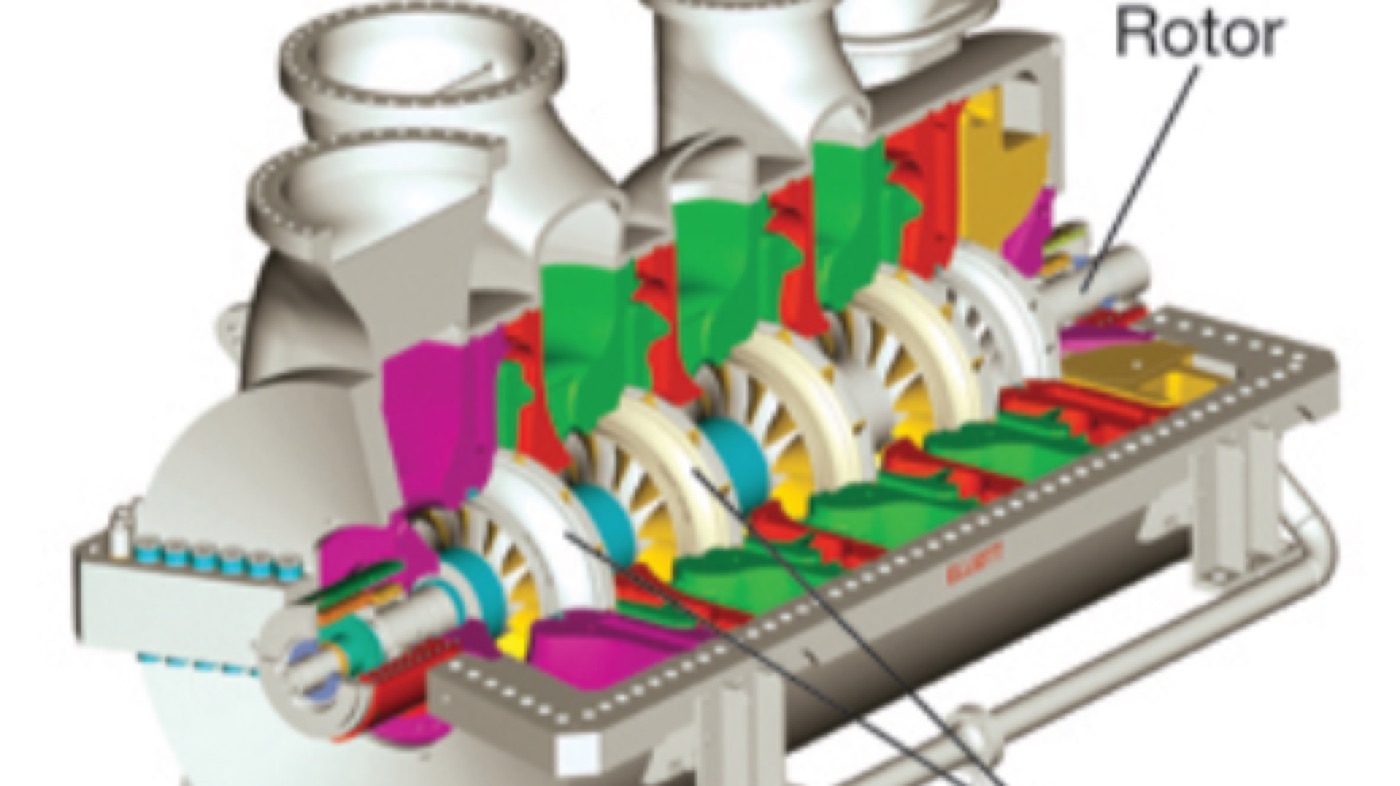
Thunderous noise shook the entire control room at 10am. Over the radio, the plant operator announced the terminal failure of the crankshaft on our recip compressor. Having worked in many oil and gas fields, I noticed compressors often sit some distance from the attention of petroleum production engineers compared to separators and flow meters. But everyone knows they are the beating heart of our operations. Many of us know more about what happens when they stop working than when they actually do.
I wish someone had taught me about compressors earlier in my career.
The Performance Curve: Your Compressor’s Personality
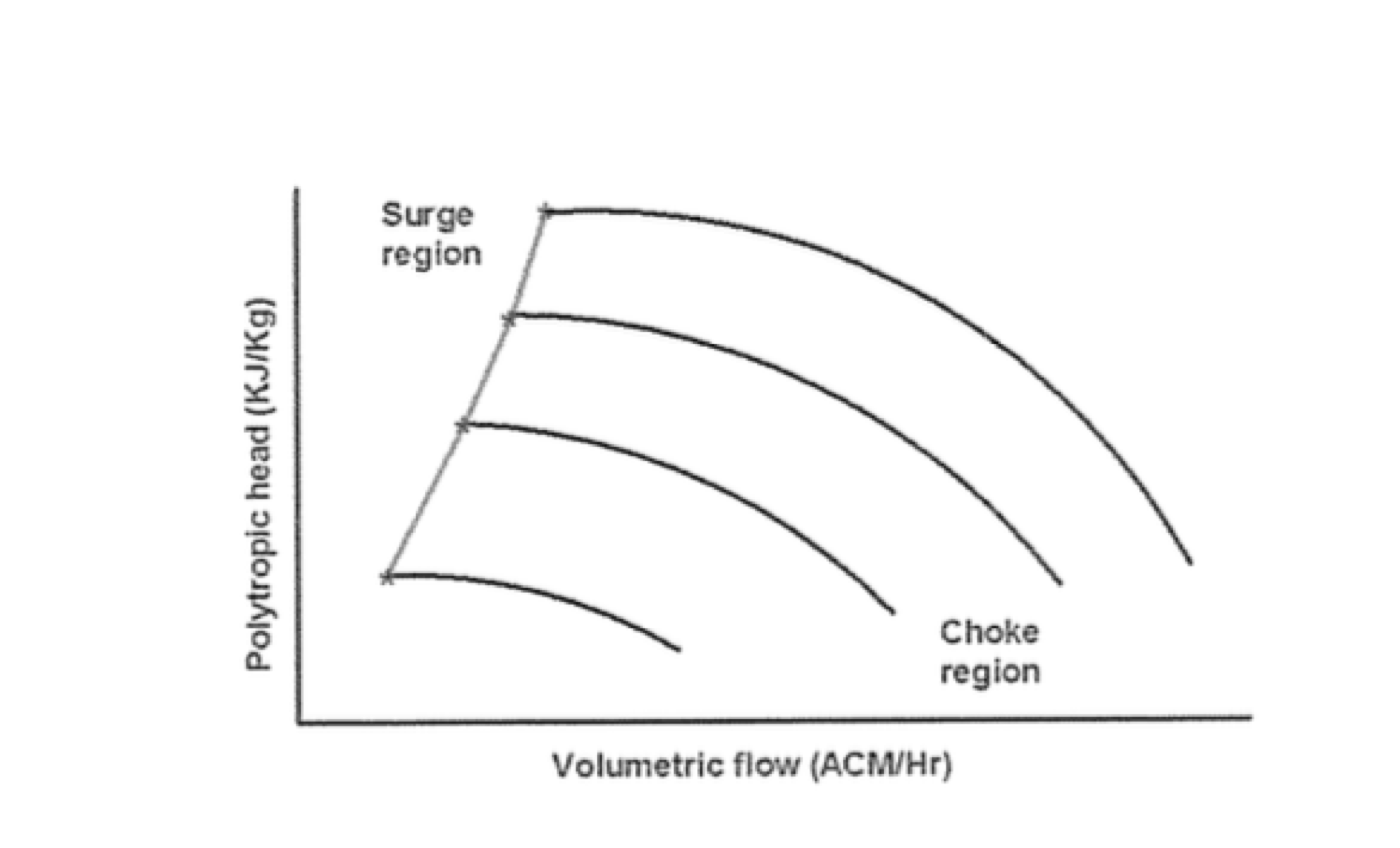
Think of a centrifugal compressor’s performance curve as its personality profile. At any given speed, there’s a specific relationship between how much gas it can move (volumetric flow) and how much energy it can impart to that gas (polytropic head).
Fixed speed compressors operate on a single curve. Variable speed machines operate across an envelope of curves, one for each speed setting. Change the speed, and you’re essentially dealing with a slightly different machine.
Variable Speed Compressor: Performance Curve
Process conditions constantly shift this operating point. A drop in suction pressure moves the operating point. A change in discharge pressure shifts it again. Molecular weight variations from reservoir depletion or gas composition changes cause yet another shift.
Understanding this dynamic relationship is the difference between confidently predicting compressor behaviour and anxiously watching screens hoping nothing goes wrong.
Surge: The Monster Under the Bed
Now we arrive at the thing that guarantees a mid-night callout from the control room.
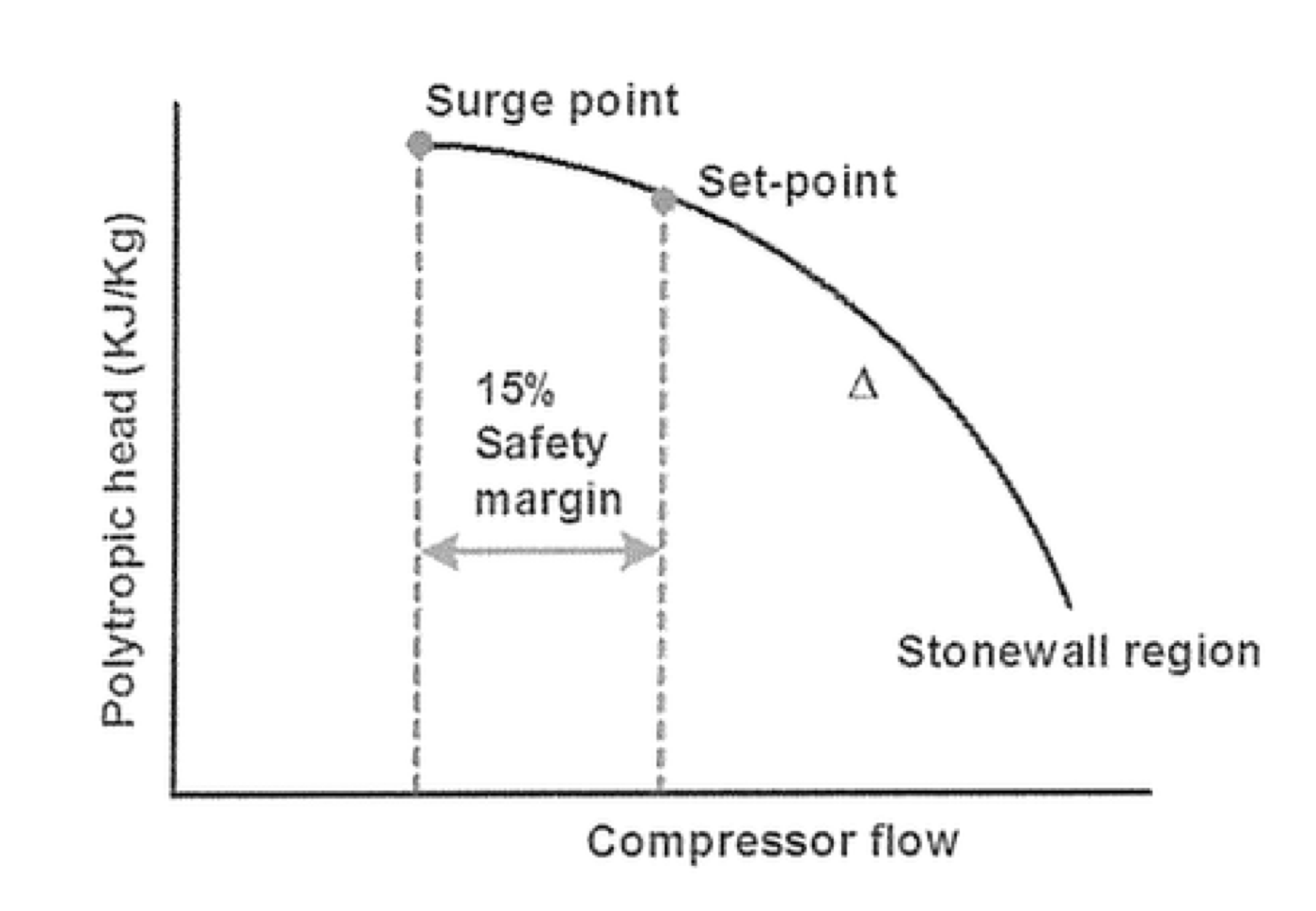
Surge is a complete flow reversal inside the compressor. It occurs when the machine tries to compress gas to too high a pressure at too low a flow rate. The gas essentially says, “I can’t do this,” and flows backwards through the machine.
Surge & Stonewall
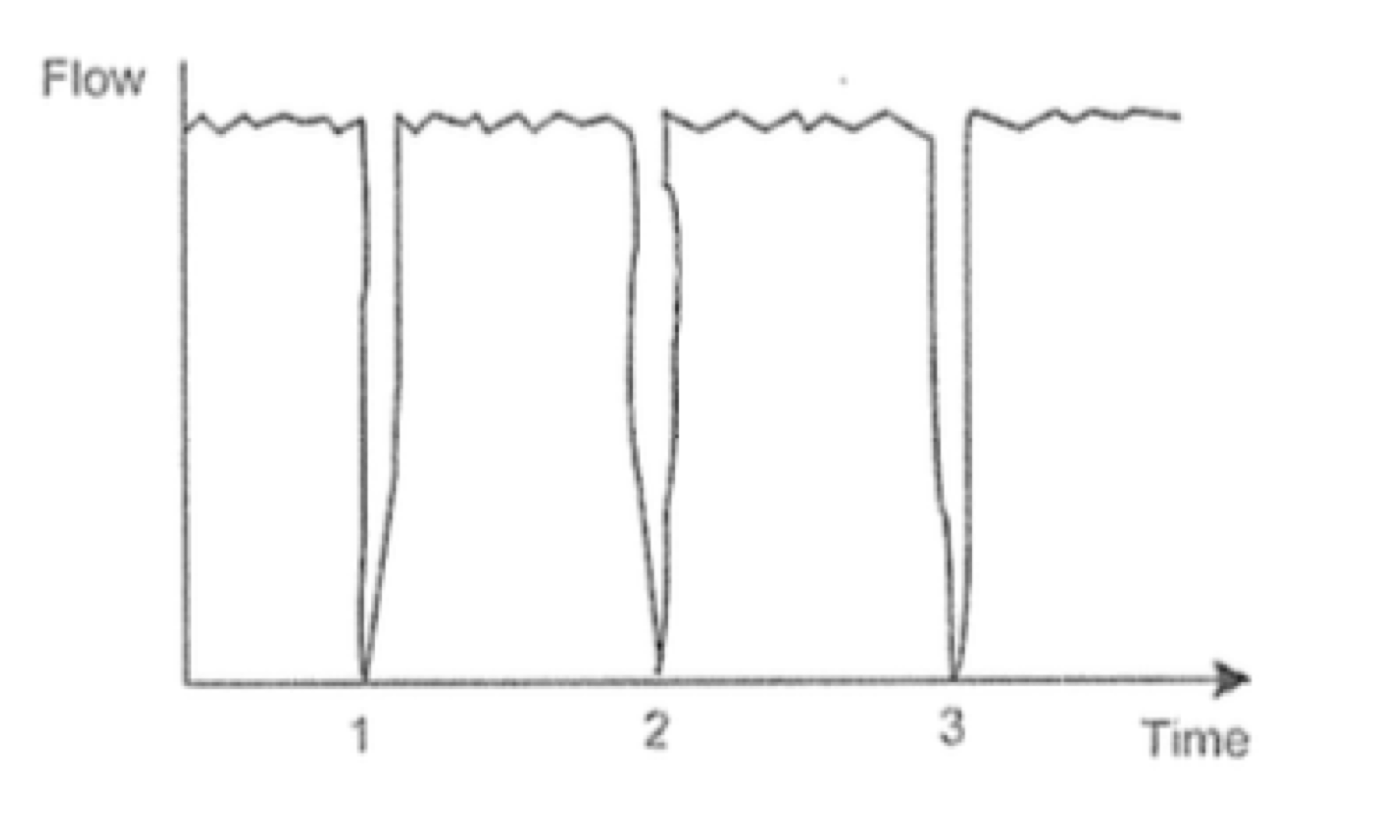
How fast does this happen? Flow can reverse within 20 to 40 milliseconds. That’s faster than a blink.
Millisecond Surge
The symptoms are distinctive. Flow oscillations become dramatic, potentially reversing from normal to zero or negative. Discharge temperatures spike rapidly because the hot discharge gas gets recycled through the impeller. Vibration increases as blades experience violent cyclic loading. That booming sound the operator mentioned over the radio? That’s pressure waves colliding as reverse flowing gas meets forward moving gas at the inlet.
To complicate things further, not all machines exhibit obvious symptoms. Some compressors have operated in surge without noticeable vibration or noise increases. The flow reversal was happening, the damage was accumulating, but the obvious warning signs weren’t there.
Why This Matters?
Beyond the obvious issue of process instability, surge causes real mechanical damage.
Conservatively designed machines might survive occasional surge with only seal system damage. But highly stressed, high power machines? They can experience bearing damage, impeller failure, and in extreme cases, shaft buckling or snapping.
The industry invests enormous effort in surge prevention because it directly impacts compressor lifespan and maintenance costs. Every surge event shortens your machine’s life, even when you can’t immediately see the damage.
The Safe Operating Envelope
This brings us to the concept that every production engineer should understand deeply: the safe operating envelope.
Imagine your compressor’s performance map. On the right side is the “stonewall” region where flow is so high that efficiency drops dramatically. On the left side is the surge line, the boundary you never want to cross.
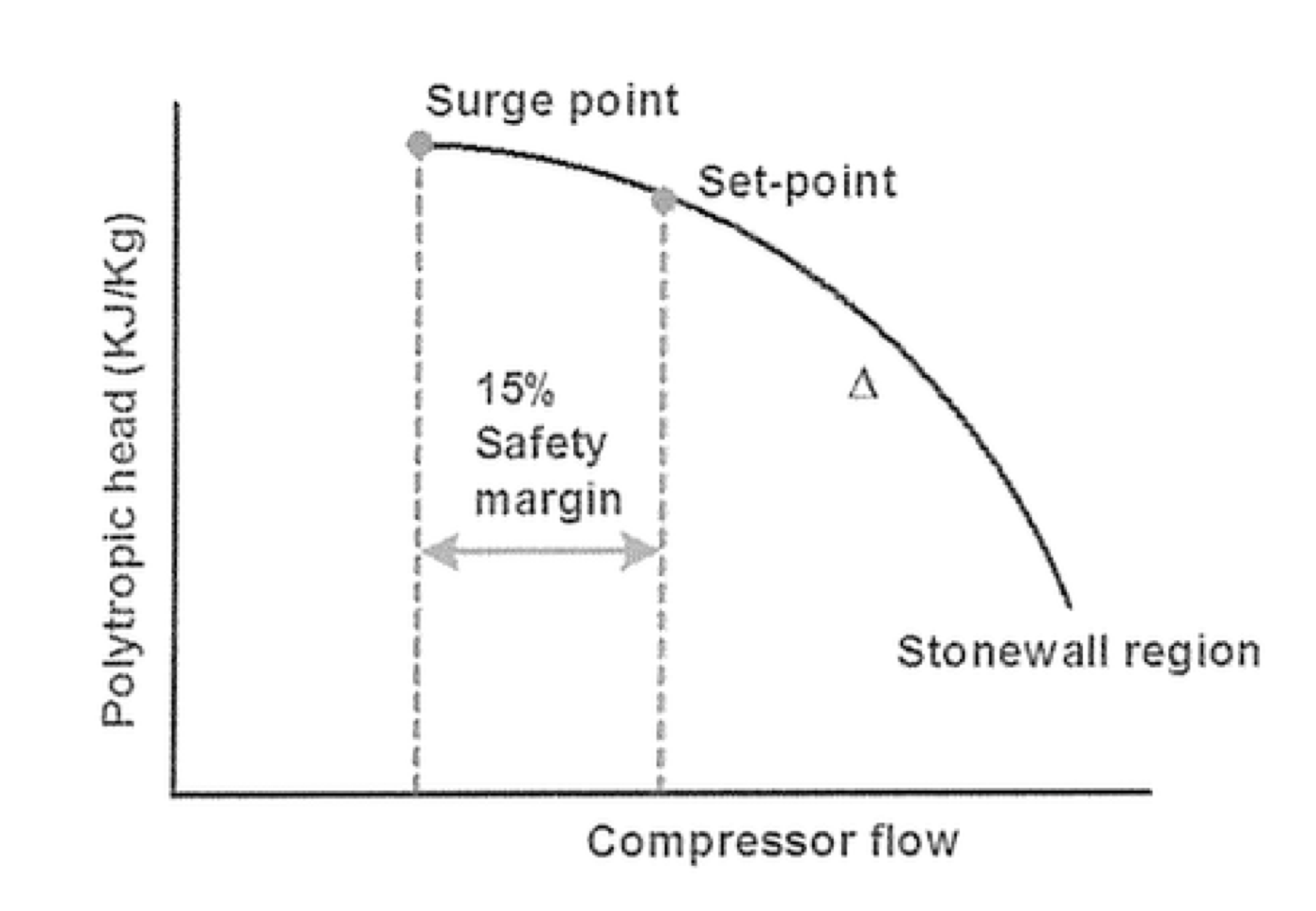
Your operating envelope sits between these boundaries. The challenge is that this envelope isn’t fixed. It moves with speed, gas composition, and operating conditions.
Modern anti surge control systems address this through multiple protective layers. The simplest approach uses a minimum flow controller with a safety margin, typically around 15% above the surge point. This works well for fixed speed machines with stable composition.
For variable speed machines, more sophisticated systems track the surge line across different speeds using algorithms that calculate where surge would occur at current conditions and maintain appropriate margins.
The DEV Number: Your Early Warning System
If your facility uses a Compressor Control Corporation (CCC) type anti surge system, there’s one number worth watching religiously: DEV, or Deviation.
DEV indicates where the compressor is operating relative to the surge control line. Positive DEV means safe operation in normal territory. Zero means the compressor is on the control line, likely recycling gas to maintain safe flow. Negative DEV means operation between the control line and the surge region.
If DEV stays negative for any period of time, investigate immediately. It’s an early warning that something isn’t right.
Performance Testing: Knowing What “Good” Looks Like
Knowing whether a compressor is performing as it should requires a baseline. And establishing a meaningful baseline requires proper performance testing.
Performance testing serves three critical purposes. First, it satisfies contractual acceptance of compressor capability during commissioning. Second, it establishes baseline performance for future comparison. Third, it helps identify why performance isn’t meeting expectations when problems emerge.
The industry standard is ASME Power Test Code (PTC) 10, and the testing tolerances are tighter than many engineers realise. That reflects how sensitive compressor performance calculations are to measurement quality.
Four parameters matter most: volumetric flow (capacity), polytropic head, polytropic efficiency, and absorbed power. Polytropic head can’t be measured directly. It must be calculated from pressure ratios, temperatures, and gas properties. This is why good instrumentation isn’t optional.
Performance Trending: Your Crystal Ball
Once a baseline exists, trending becomes the most powerful diagnostic tool available.
Tracking polytropic head divided by speed squared normalises for speed variations and reveals true performance changes. Monitoring actual flow divided by speed catches volumetric efficiency degradation. Watching polytropic efficiency flags signs of increasing internal losses.
Several factors cause performance to decline. Wear on impellers, diffusers, and seals gradually reduces effective aerodynamic geometry. Fouling deposits contaminants on gas contact surfaces, sometimes causing sudden changes. Gas composition shifts affect thermodynamic properties in ways that look like mechanical problems but aren’t. Bearing wear alters clearances and increases leakage losses.
Multiple failure modes produce similar symptoms. Definitive diagnosis often requires visual inspection of the machine during a scheduled outage. But trending patterns frequently point toward the responsible mechanism, helping engineers plan interventions before catastrophic failure.
The Operational Reality Gap
Any good practical engineer knows there’s always a gap between what theory predicts and what actually happens.
Simple mathematics can predict surge points. But controlling a real compressor approaching surge at 20 to 40 millisecond timescales, with changing gas composition, varying suction conditions, and multiple impeller stages, requires sophisticated multi layer control logic developed through decades of hard won operational experience.
This is why actual surge testing during commissioning is essential. Multi impeller machines exhibit complex surge characteristics that cannot be predicted theoretically. The only way to know where a specific machine will surge under specific conditions is to test it carefully and deliberately.
What This Means for You
Becoming a compressor expert isn’t necessary. But understanding these fundamentals transforms how you approach operations. From surge control to performance monitoring, combining this knowledge with solid petroleum engineering skills makes you a true asset to any team.
Production optimisation depends on full working knowledge of all components and their dependencies. The compressor doesn’t operate in isolation. It responds to everything happening upstream and downstream. Understanding that interconnection, and knowing which numbers to watch, separates reactive troubleshooting from the true operational excellence.
This article draws on practical Control & Operation of Centrifugal Gas Compressors from ESD simulation training, bridging the gap between thermodynamic textbooks and operational reality.