
Imagine you own a successful Subway restaurant in Brisbane’s bustling CBD. Your daily operations are efficient, with optimal staffing, balanced stock, and minimal waste. But with the Brisbane Olympics coming in 2032 (exciting times!), you’re anticipating unprecedented customer demand and significant profit opportunities. It’s clear your existing processes will struggle. Do you:
- Accept current limitations and lose customers unwilling to wait?
- Increase resources—but exactly which resources, and by how much?
- Maximise existing resources by redesigning your processes, retraining staff, or addressing space constraints?
Traditional vs. Data-Driven Approaches
A simple business process is depicted in below figure.
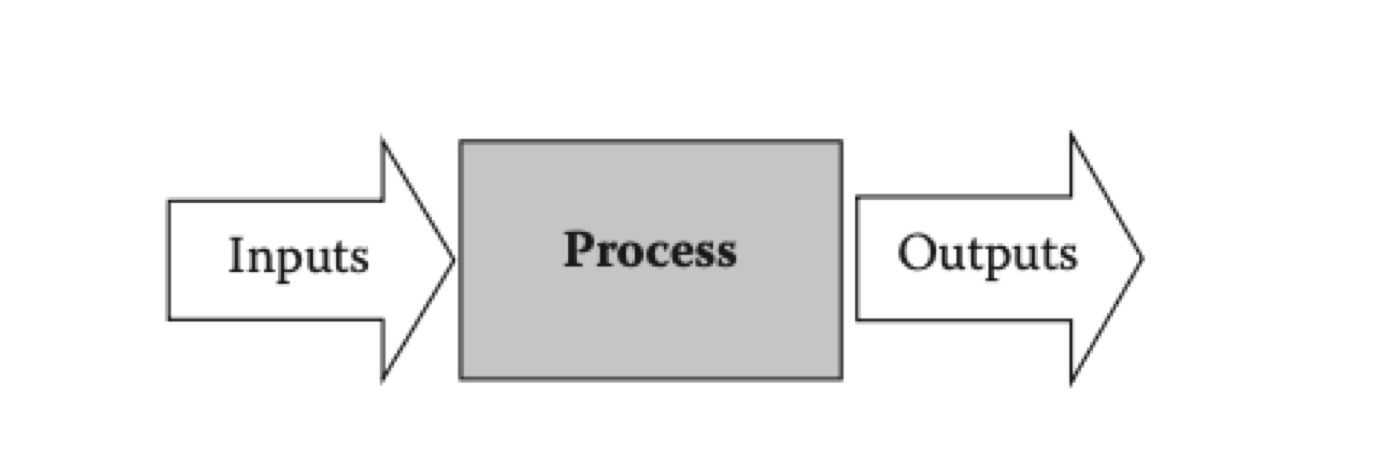
Simple Model of a Process
Business processes typically balance inputs (customer arrivals) and outputs (customers served), as depicted below, in two common ways.
- Deterministic (average-based): If X workers prepare Y sandwiches per hour, matching an average hourly demand (Z customers), operations seem balanced.
- Empirical-based (experience-driven): Observing queue lengths or customer waiting times indicates when resources might need adjusting.
However, these methods often fail to account for variability such as fluctuating customer arrivals or unexpected resource downtime.
From Restaurants to Oil & Gas: The Power of Data-Driven Decisions
Now, consider the Coal Seam Gas (CSG) industry—specifically the workover process. Your petroleum engineering team knows your field’s Mean Time to Failure (MTTF) and the typical workover process from failure detection to reinstatement. With ambitious drilling plans ahead and initiatives aimed at improving MTTF, accurately forecasting future resource needs is critical yet challenging.
Traditional deterministic or empirical methods struggle with operational variability, potentially leading to underinvestment (lost production) or costly over-investment.
Benefits of a Data-Driven, Probabilistic Approach:
- Identify Real Bottlenecks: Precisely pinpoint constraints in your process.
- Optimise Resource Allocation: Align resources (rigs, crews) exactly with anticipated demand.
- Evaluate Scenarios: Assess the real-world impact of operational improvements, like better MTTF, before implementation.
I hope this article whets your appetite for more—there’s far too much detail to cover in a single post. Therefore, I’m publishing a two-part series on Data-Driven Business Process Improvement:
- Part 1 will use a simple workover process to illustrate how a data-driven approach outperforms traditional methods in dealing with variability and uncertainty.
- Part 2 will dive into how to apply business process mining for process design, KPI monitoring, and continuous improvement—helping you unlock more value from your existing operational data.
Stay tuned as we uncover practical strategies for transforming uncertainty into operational advantage. The goal? To make our processes run with the precision and speed of an F1 pit stop.
I’d love to hear your thoughts: Has your organisation adopted data-driven methodologies, or does intuition still lead the way?