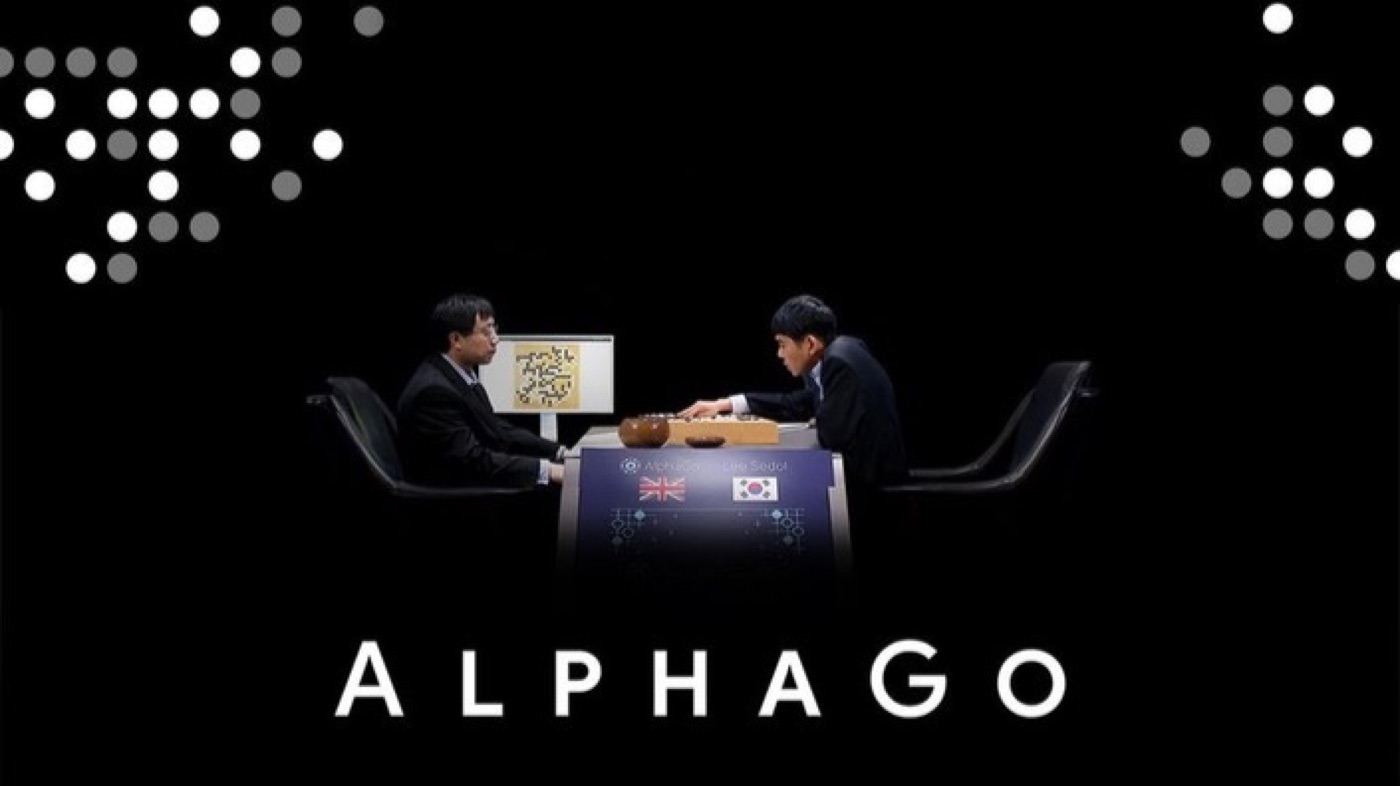
Seoul, South Korea. March 13th, 2016.
Lee Sedol stared at the board. For three consecutive games, he had lost to a machine. The match was practically over.
AlphaGo, Google DeepMind’s artificial intelligence, had dismantled the greatest Go player of his generation with moves that seemed to come from another dimension of understanding.
Then came move 78 in Game 4, which would later be called “God’s Touch.”
The move was so unexpected, so brilliant, that commentators struggled to articulate what they were witnessing. AlphaGo, which had played with supernatural precision for three games, faltered. The machine that seemed invincible revealed a blind spot that only human intuition could have found.
Lee Sedol won.
The crowd erupted. Commentators wept. It wasn’t just a game. It was humanity’s refusal to surrender. One victory against the inevitable tide of artificial intelligence. A glimpse of what humans could still do that machines could not.
We thought we were watching the last time a human would beat AI at something that we reigned supremacy over thousands of years.
We were right about that.
But we were wrong about what it meant.
Eight Years Later: Stockholm. October 9th, 2024.
Demis Hassabis, the man who built AlphaGo, received the call. The Nobel Prize in Chemistry. Not for a university breakthrough, not for decades of laboratory work, but for building an AI system in a corporate lab that solved what fifty years of academic research could not.
For half a century, scientists had struggled with the protein folding problem: how do chains of amino acids fold into 3D shapes that determine everything a protein does? Protein structures control how diseases spread, how drugs work, how life itself functions at the molecular level. But determining each structure required months or years of painstaking experimental work.
Hassabis and his colleague John Jumper built AlphaFold. An AI system that could predict in minutes what took humans years to discover.
The Nobel Committee awarded chemistry’s highest honour to researchers at a tech company for work accomplished by artificial intelligence.
Let that settle for a moment. The grandest challenge in biology. Solved by AI. In a corporate laboratory.
And what happened next revealed something we hadn’t understood when Lee Sedol won Game 4.
Summer 2021: The Moment Disbelief Turned to Wonder
When DeepMind released AlphaFold 2 in July 2021, the initial database contained around 400,000 protein structure predictions. Within a week, computational experts tested it on the hardest problems they knew. They confirmed what seemed impossible: it actually worked.
But most biologists weren’t convinced. They assumed AlphaFold had only solved easy cases, toy problems that looked impressive but wouldn’t work on genuinely difficult proteins.
Then DeepMind released the full database to everyone.
John Jumper, who would share the Nobel Prize with Hassabis, remembered what happened next:
“People were like, well, let me just see how dumb the AI engine was, and click on their protein of interest, I think expecting to make fun of it. And then they sat there and they were amazed.”
Thousands of researchers loaded their proteins into the system. The ones they’d spent years studying. The hard problems that defined their careers. They were preparing to debunk it, to prove that real science couldn’t be done by a computer program.
One researcher saw AlphaFold’s prediction of a structure they’d been working on for years and posted on Twitter.
“How did they get a copy of my structure? How did DeepMind get this thing that I had done and not yet published?”
They couldn’t believe it. The structure was so accurate they assumed DeepMind had somehow stolen their unpublished experimental data.
That moment, multiplied across thousands of researchers discovering their proteins had been solved, marked something profound.
The Black Box
What made this even more remarkable was what Jumper confessed later. Reflecting on AlphaFold’s impact, the Nobel Prize winner admitted something that should have been impossible:
“I think the real shock to me is those weights that we train, that system, that piece of computer software has been so incredibly practically important to scientists working in this field to this day… all this different type of science published on top of this as a black box computer program, and the extent to which that has entered into scientific practice has been really, I think, beyond my imagination.”
The man who built AlphaFold was shocked by how completely scientists embraced it.
Three million scientists. In 190 countries. Using a system whose internal logic they couldn’t fully explain. Staking research grants, careers, and potentially human lives on predictions from neural networks they didn’t understand. Building entire research programs on a black box.
Scientists, trained to trust only what they could verify through rigorous protocols, were using an AI they couldn’t explain to make critical decisions about drug development and disease research.
Because it worked. When they tested AlphaFold’s predictions against experimental reality, the predictions proved reliable. The validation came from outcomes, not from understanding the mechanism.
By 2024, DeepMind released AlphaFold 3, expanding beyond proteins to predict all of life’s molecules: DNA, RNA, small molecules, ions, and the interactions between them. The complete molecular machinery that makes every cell function. Four years from breakthrough to Nobel Prize. The pace of transformation had become exponential.
What Lee Sedol Taught Us
After his devastating loss to AlphaGo, Lee Sedol didn’t quit. He studied AlphaGo’s games, analysing moves and strategies that thousands of years of human play had never discovered. In the two months following his defeat, he won every tournament he entered.
He had learned from AI.
Move 78, Lee Sedol’s brilliant “God’s Touch,” wasn’t humanity’s last stand.
It was humanity-AI collaboration.
The Beginning
Four years from AlphaGo defeating Lee Sedol to AlphaFold solving protein folding. Four more years to a Nobel Prize. Eight years total from winning the hardest board game in Seoul to transforming the foundation of biological research.
And the pace is still accelerating.
Somewhere right now, a researcher is loading their protein into AlphaFold 3, the one they’ve spent years studying. In moments, they’ll see a prediction so accurate they’ll wonder how it’s possible. Then they’ll realise what thousands of researchers before them discovered: the machine just freed them to ask bigger questions.
Questions about how diseases work. How to design better drugs. How to understand life at its most fundamental level.
The moment we stop competing with our tools and start creating with them will be the true turning point.
And we’re only just beginning to understand…