
Lately, I’ve been deep in the world of posting about data and production engineering… but let’s switch it up a bit. Time to talk about something a little more old-school — Pressure Transient Analysis. And I’ll say it: PTA is the most exact science in oil and gas. Full stop.
Flashback to 2008 — I was a grad petroleum engineer on an offshore field with one of the most permeable reservoirs I’d ever seen. We’re talking nearly 2 darcies. Sounds like a dream, right?
Now imagine this: you were waiting for the pressure downloads from the rig every 3 hours at midnight, and the rig keeps asking, “Have you got what you need?” Meanwhile, pressure built so quickly that it started coming down… And what a state of panic that was. *“Is the downhole valve passing? Or am I seeing things”.*Mayday, mayday — this was turning into a full-blown well test mayhem. And of course, the engineer (me), also happened to be the lead, the manager, and basically everyone else on the org chart because… I was the only one on the job.
Despite a meticulous test design (five gauges — above and below the valve with contingencies), I overlooked one tiny detail: tides.
Yep — the ocean decided to join the test. Those gentle tidal fluctuations? They made my high-precision pressure data look like it was having a midlife crisis.
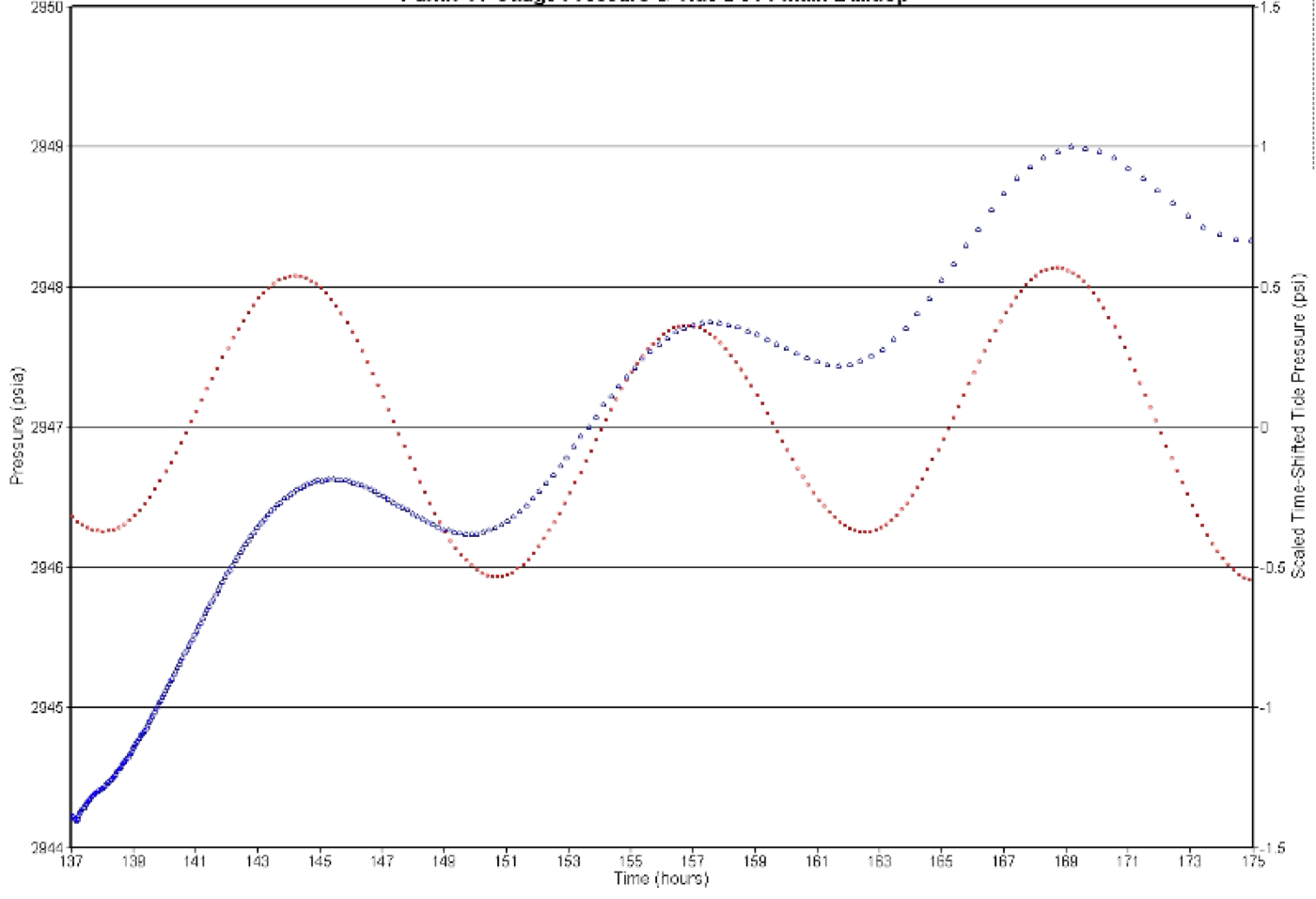
Before Tidal Correction
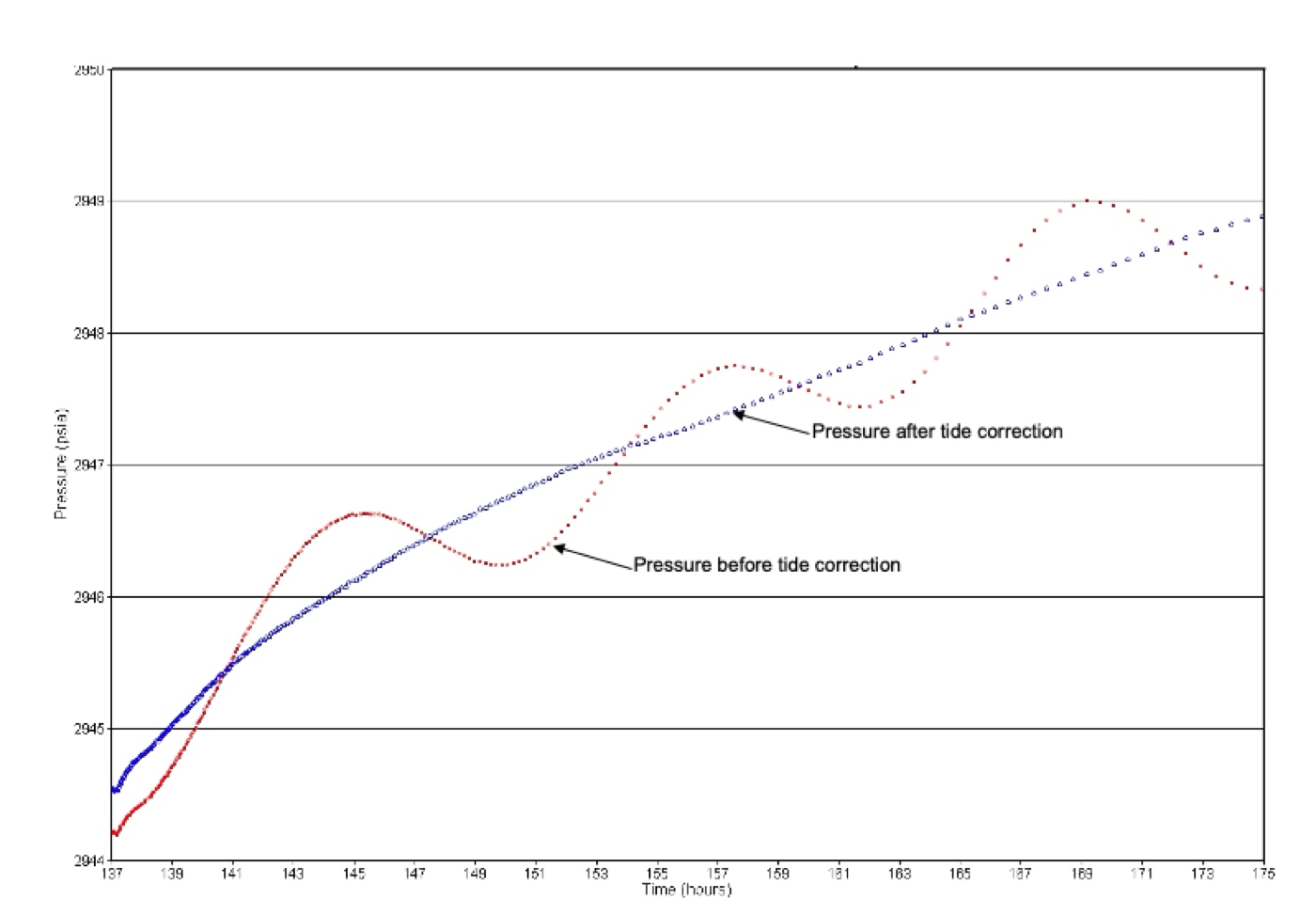
After Tidal Correction
Abandoning the test wasn’t an option — not when it cost as much as a house in Sydney (well… maybe not the 2008 Sydney). So, I did what I had to do. I got on the phone with a guy from the Bureau of Meteorology (probably the same one who predicted Cyclone Alfred), grabbed their tidal prediction data, and hacked together a tidal correction algorithm — complete with time shifting and scaling.
After some trial, error, and a healthy dose of existential dread, I finally peeled back enough noise to see the real reservoir response.
🎯 Close call. Sometimes I wonder — if I had chickened out and called off the test, would we have ended up with the same results? Probably. And I probably would’ve been shown the door.
But it didn’t end there…
There were two sand layers connected by leaky shales. No single analytical solution for that unless you simulate the near wellbore with something like PanMesh (not sure if it still exists).
Solution was to split the analysis into early- and late-time phases and ensuring consistent parameters used for both phases. Another key was that I worked closely with a geophysicist to make sure I wasn’t just pressure-matching to Narnia.
📌 Takeaways:
- Always get the person analysing the data to design the acquisition — that goes for all kinds of data acquisition and analysis, not just PTA.
- Great analysis doesn’t come from perfect data. It comes from a bit of science, a bit of art, and a lot of stubbornness.
- And sometimes, you need to fight the ocean to get the job done.
💭 Got any close calls in your career? Let’s hear them!
#PetroleumEngineering #WellTesting #ReservoirEngineering #PTA #EngineeringStories #Throwback #DataWithCharacter